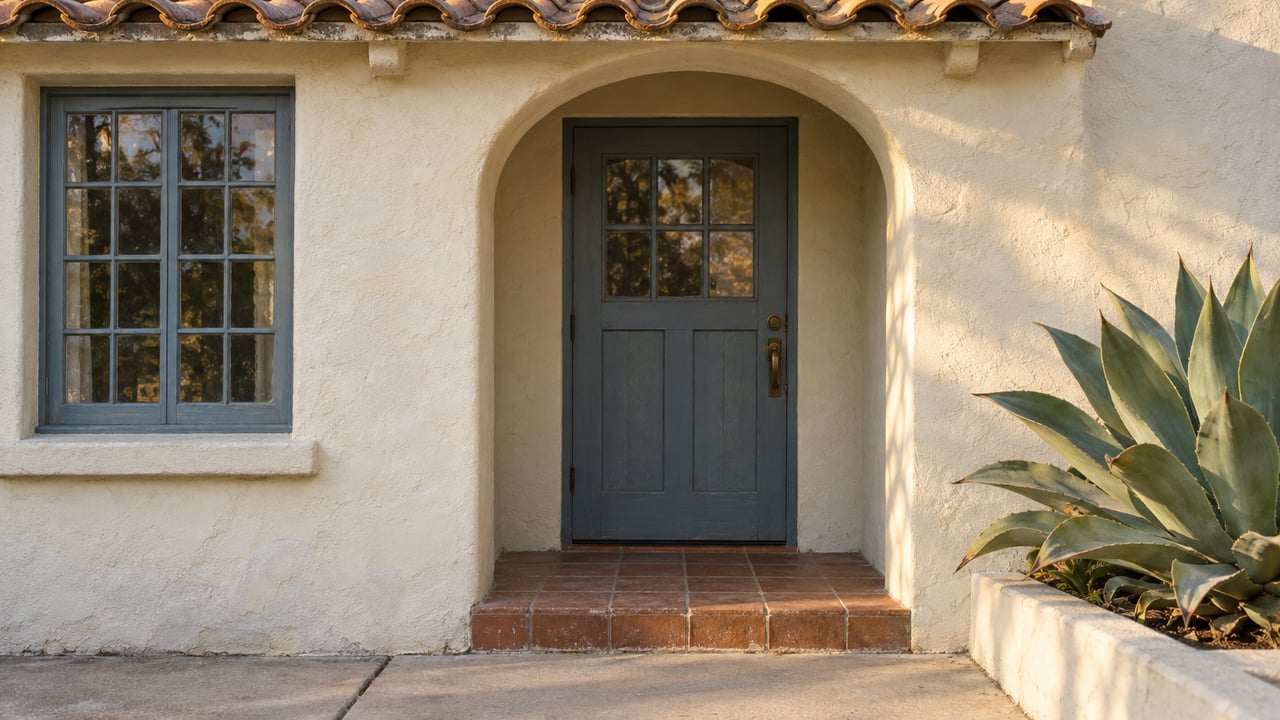
A seller in downtown Ventura or Hobson Heights will often mention the Mills Act in the first showing, usually in the same breath as square footage and lot size. The pitch sounds simple: the house carries a property tax reduction because it is a designated historic landmark. What rarely comes up in that conversation is that the buyer isn't inheriting a discount. They're inheriting a contract, and it comes with its own appraisal formula, its own renovation rulebook, and its own exit penalty if anyone ever wants out early.
The Mills Act is a California law that lets cities and counties sign historic property tax agreements with homeowners in exchange for ongoing restoration and maintenance. The City of Ventura runs its own program for properties on the city's landmark register, and the Ventura County Resource Management Agency runs a parallel program for historic properties in the unincorporated county, including areas like Camarillo Heights, the Ojai Valley, and Piru. Both versions share the same structural bones, and those bones are worth understanding before an offer goes in, not after escrow closes.
The Tax Break Runs With the House, Not the Owner
A Mills Act agreement is written for a minimum ten-year term and it renews automatically each year unless someone files to stop it. That single detail changes the transaction. The Ventura County Assessor's office is explicit that a qualified historical property under contract is valued using an income, or capitalization, approach rather than the standard market approach used for every other house on the block. Instead of comparing recent sales, the assessor estimates what the property could reasonably rent for, applies a capitalization rate set partly by a historical property risk component, and arrives at an assessed value from that formula.
That is a different number than the one a buyer's own comparables might suggest, and it moves independently of the neighborhood's sale prices. A stretch of strong comps on nearby non-landmarked homes doesn't pull a Mills Act property's assessment up the way it would for an ordinary sale. The contract, not the market, sets the ceiling.
The obligations attached to that number transfer with the deed. The California State Parks Office of Historic Preservation states plainly that a Mills Act contract is binding on all subsequent owners during the contract period, and Ventura County's own program page describes the agreement as a formal agreement between the county and the property owner for a revolving ten-year term. A buyer closing on a landmarked home in Ventura isn't opting into the program. They're stepping into whatever version of it the previous owner signed, on whatever schedule of improvements that owner committed to.
The Renovation Rules Are Part of the Deal
Every Mills Act contract in Ventura requires that interior and exterior work on the property conform to the Secretary of the Interior's Standards for Rehabilitation, the federal benchmark for how historic buildings should be repaired, altered, and added onto without erasing what made them historic in the first place. That standard governs window replacement, exterior paint and material choices, additions, and most structural changes for as long as the contract runs. The county collects a deposit from the applicant specifically to cover planner time spent administering the contract and conducting inspections, which means the oversight is not a one-time review at signing. It continues.
For a buyer who wants a kitchen expansion or a new primary suite, this is the part of the Mills Act conversation that matters more than the tax line. The reduced bill offsets restoration costs. It was never designed to fund a modern remodel that departs from the home's original character, and the standards exist specifically to prevent that kind of departure.
What It Costs to Walk Away
If an owner wants out of a Mills Act contract before the term runs its course, California Government Code sets a specific price for that. Cancellation triggers a fee equal to 12.5 percent of the property's current fair market value, as determined by the assessor without regard to the contract, and cancellation only happens after the legislative body holds a public hearing on the matter. Local governments can also cancel a contract for breach, following the same hearing requirement, if an owner lets the property deteriorate below the standard that qualified it in the first place.
None of this is unusual or predatory. It's how the incentive is designed to work. But it means a buyer evaluating a Mills Act property should be pricing in a decade of restoration obligations and a real financial penalty for changing course, not just a lower line item on the property tax bill.
The Quieter Way More Ventura Homes Get Pulled In
Most real estate conversations about historic designation assume it only applies to the obviously old stuff, the craftsman bungalows and Spanish revivals near downtown. Ventura's own preservation program complicates that assumption in a way that's easy to miss.
Nationally, a structure typically needs to be at least 50 years old before it's evaluated for historic significance. Ventura sets its own bar lower. The city's historic resource survey includes structures 40 years and older, specifically so potential landmarks aren't overlooked. In practical terms, that means a house built in 1986 is already old enough to be swept into a historic resource assessment in 2026, years before it would draw the same scrutiny almost anywhere else in the country.
The city acted on this directly earlier in 2026. A citywide Historic Context Statement and Survey went to a public hearing, and City Council took final action on April 28, 2026, after asking owners of properties identified in the draft survey to submit comments ahead of that hearing. Whatever the final list looks like, the mechanism behind it is the real story for buyers: a much wider band of ordinary, unremarkable-looking Ventura homes than most people assume can be flagged for historic assessment the moment a major remodel or demolition application comes in.
Ventura's designated landmarks already number in the hundreds. As of 2018, the city had recorded 111 individual Ventura Historic Landmarks and five separate Ventura Historic Districts, a list that has only grown since. Some of those landmarks are well known locally, like the Thomas Gould Jr. House on Lynn Drive, an American Craftsman bungalow built in 1924 and designed by Henry Greene of the Greene and Greene architectural partnership, listed on the National Register of Historic Places in 2005. Others sit quietly inside neighborhoods like Hobson Heights, where craftsman bungalows and Spanish-style homes from the 1940s and 1950s make up much of the housing stock, without every owner necessarily knowing their home's designation status or its proximity to the survey boundary.
What This Actually Means Before You Write an Offer
For a buyer looking at a home anywhere in Ventura built before roughly 1986, the historic-resource question is worth asking even if the house doesn't look historic. A major remodel or teardown application on a property that age can trigger a resource assessment under the city's own survey threshold, which can affect both timeline and design flexibility long before Mills Act status ever enters the conversation.
For a buyer specifically considering a landmarked property already under a Mills Act contract, the questions are different and more concrete. Ask for a copy of the existing contract and read the list of improvements the current owner committed to completing. Ask how those obligations have been tracked and whether the required inspections have happened on schedule. Ask what year the ten-year term began, since that clock resets with renewal but the underlying commitments don't disappear just because a sale is happening. And run the numbers on the income-approach assessment against a standard market comparison, because the gap between those two figures is the actual size of the incentive, not an assumption based on the county's average savings.
For a seller, the contract's value proposition to a buyer depends entirely on how clearly that history gets presented. A landmarked home with clean inspection records and a well-documented restoration history is a genuinely different asset than one where the paperwork is thin and the buyer has to reconstruct a decade of obligations from scratch.
A Few Questions Worth Asking Directly
Does buying a Mills Act home mean I automatically inherit the same tax savings the seller had? The contract and its income-based valuation transfer with the property, but the actual dollar savings depend on the specific capitalization formula applied to the home at the time of transfer, not a fixed number carried over from the previous owner's bill.
Can a Mills Act contract be modified after purchase? The core ten-year restoration and maintenance terms are set by the original contract and by state law. Specific renovation plans still need to conform to the Secretary of the Interior's Standards, and any changes to the underlying agreement go through the same public hearing process as a cancellation would.
If my house wasn't built until the 1980s, could it still get flagged as historic? Possibly. Ventura's own survey criteria start at 40 years old rather than the more common 50-year national standard, which is why the citywide survey completed in 2026 covers more properties than many owners expect.
Heidi Golff has spent more than two decades working Ventura County transactions, including the landmarked and near-landmark homes that carry these exact questions into escrow. If a Mills Act contract, a historic district boundary, or a survey letter has landed on your desk and you want someone who can read it in context, reach out to Heidi Golff before you sign anything.