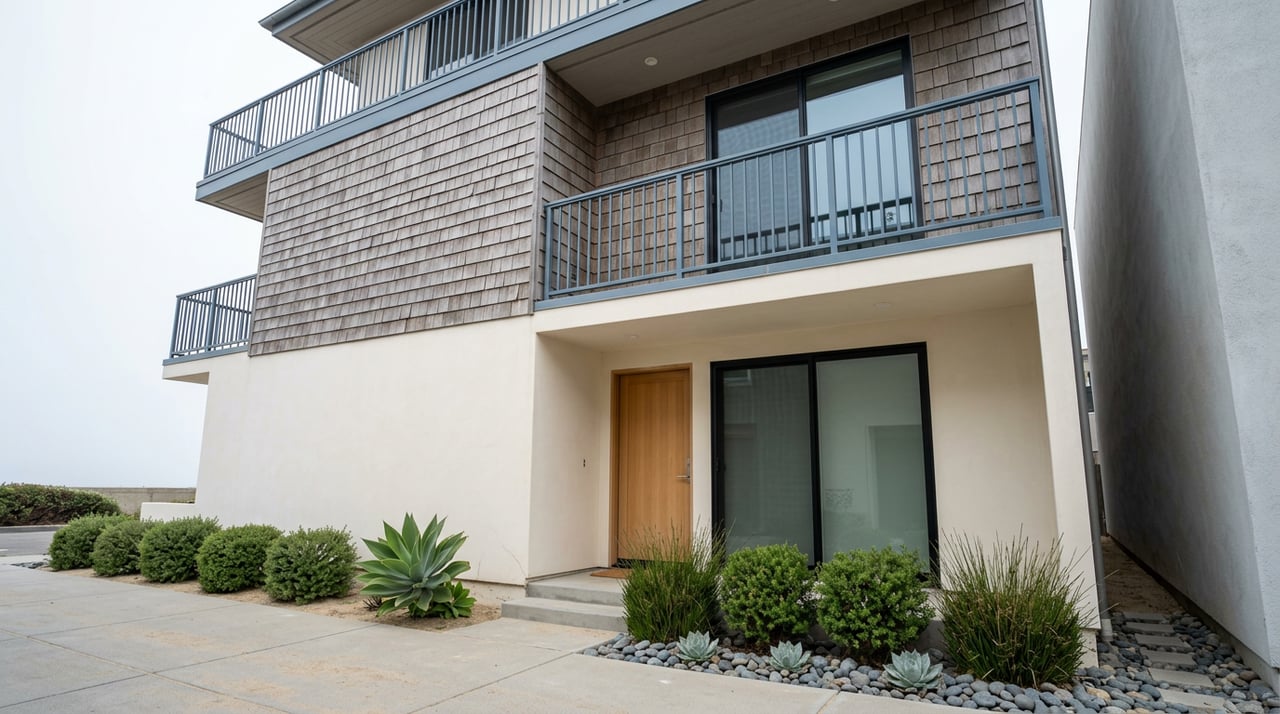
Two beach-close cottages, both a few blocks from the sand in Ventura, both listed this summer with some version of the phrase "great short-term rental potential" in the description. One sits in Pierpont. The other sits downtown, closer to Main Street. On paper, both neighborhoods carry the same citywide cap on short-term vacation rental permits: 100 each. A buyer skimming both listings could reasonably assume the odds of actually getting a permit are roughly equal.
They are not. And the reason why is the kind of detail that only shows up once you read the ordinance itself rather than the listing copy built on top of it.
The cap number is the same. The math underneath it isn't.
Ventura's updated Short-Term Vacation Rental ordinance sets neighborhood-by-neighborhood permit ceilings: 100 in Downtown, 100 in Pierpont, 35 in the Harbor and Keys area, 40 along The Avenue, 35 in Midtown, and 45 on the Eastside. Read quickly, that table looks like a simple scarcity ranking, more permits available in some places than others.
| Neighborhood | Permit Cap | Extra Restrictions |
|---|---|---|
| Downtown | 100 | 2 permits max per owner |
| Pierpont | 100 | 1 permit max per owner, plus 10% of homes per lane |
| Eastside | 45 | 2 permits max per owner |
| The Avenue | 40 | 2 permits max per owner |
| Harbor/Keys | 35 | 2 permits max per owner |
| Midtown | 35 | 2 permits max per owner |
Downtown and Pierpont share the top number. Everywhere else in the city, an owner can hold up to two permits. Pierpont caps that same owner at one. And Pierpont adds a second constraint that doesn't apply anywhere else in the ordinance: no more than 10% of the homes on a given lane can carry an STVR permit, regardless of how many permits remain in the citywide pool. The city's own quick-reference materials spell this out plainly, noting that only one permit is allowed in the Pierpont area per owner.
That second restriction is the one that actually decides outcomes, block by block. A lane in Pierpont with ten homes can support one permitted rental. If that slot is already filled, the citywide count showing "40 of 100 issued" is irrelevant to the house next door. The cap that matters isn't the neighborhood-wide number on the city's dashboard. It's the lane you're standing on.
Why this is the year it actually bites
Ventura has regulated vacation rentals since 2007, but the version of the rules that puts these caps into practice only became live this year. New STVR applications opened on July 13, 2026, and existing permit holders had until August 31, 2026, to file for renewal or see their permits canceled outright. That window has now closed.
The city also raised the cost of holding one of these permits substantially, from $204 to $1,526, effective July 1, 2026. Add the standing requirement to collect and remit a 10% Transient Occupancy Tax with a $1,000 annual minimum, and the economics of a Ventura short-term rental look different than they did even two years ago, before any conversation about neighborhood caps enters the picture.
For a buyer evaluating a Pierpont listing today, that timeline is already behind us, which makes it more important, not less. If the seller's permit predates the update, it either survived the August 31 renewal deadline or it didn't. A lapsed permit means the "STR income" baked into a seller's pricing logic is gone, and a new buyer inherits a house that has to reapply into a market that may already have hit its lane cap.
The five-year clock on multi-permit portfolios
A separate provision affects a smaller but real group of Ventura owners: anyone who currently holds more than two STVR permits across the city. Under the ordinance's grandfathering language, those owners can renew existing permits now, but after five years from the ordinance's effective date, they're limited to two permits total, with no more than one of those in Pierpont. Permits beyond that count simply expire and can't be renewed.
If you're looking at a property being marketed as part of an investor's rental portfolio, this is worth asking about directly. A portfolio built around three or four Ventura permits isn't a stable asset. It's an asset with an expiration date, and the seller's asking price may or may not reflect that the extra permits attached to a package deal won't survive the current owner's exit.
What a Pierpont buyer can still do
The ordinance does leave one door open that didn't exist before: a Homestay permit, which allows an owner who lives on the property full time to rent out a room or portion of the home, separate from the STVR permit system and its lane caps. It's a narrower use case than a whole-house vacation rental, but it's available citywide, including in Pierpont, without competing against the 10%-per-lane restriction. For a buyer who wants to live in the home and offset part of the mortgage rather than run a full investment rental, this is the more realistic path in a neighborhood where the STVR lane cap may already be full.
Accessory dwelling units don't offer that flexibility. Under the ordinance, a property with an ADU can only rent both the main house and the ADU for terms longer than 30 days. An STVR permit can't be issued for either structure on that lot. If a listing's investment pitch depends on renting an ADU nightly, that math doesn't work under the current rules.
What to verify before the STR income enters your offer
Before treating a seller's projected rental income as part of a Pierpont or Ventura coastal home's value, it's worth confirming a short list of specifics directly with the city rather than taking a listing description at face value:
- Whether the property currently holds an active STVR permit, and whether that permit survived the August 31, 2026 renewal deadline or was already canceled.
- How many permits are currently active on that specific lane, if the property is in Pierpont, since the 10% cap is what actually governs availability there, not the citywide count.
- Whether the seller holds more than two permits total across the city, which would place any beyond the first two on the five-year sunset clock.
- Whether the unit in question is a primary dwelling, an ADU, or part of a lot with both, since ADU-attached rentals are ineligible for STVR permits under the current ordinance regardless of location.
None of this changes what the house is worth as a home. It changes what the house is worth as an income property, and that's usually the number driving the asking price on a coastal Ventura listing in the first place.
A few common questions
Does an existing STVR permit transfer automatically to a new owner? No. Permits are tied to compliance and renewal status under the city's process, not automatically conveyed with a sale. A buyer should confirm the permit's current standing rather than assume it carries over.
Can I apply for a new permit after closing escrow? Yes, if the zone hasn't hit its cap. The city has been accepting new applications since July 13, 2026, on a first-come basis within each geographic zone. Once a zone's cap is reached, the city establishes a waiting list, so timing and zone capacity both matter.
Is Pierpont the only neighborhood with a per-lane restriction? Based on the current ordinance, yes. The 10%-of-homes-per-lane limit applies specifically to Pierpont, on top of the citywide neighborhood cap that also applies everywhere else.
Ventura's coastal neighborhoods will keep drawing buyers who want a beach walk and a mortgage payment that partially covers itself through short-term rental income. That's a reasonable goal. It just depends now on a permit system that treats identical-looking numbers very differently depending on which lane the house sits on.
If you're comparing a Pierpont listing against options in Midtown, the Harbor, or elsewhere in Ventura, it's worth having someone walk through the specific permit status and lane count with you before the STR income becomes part of your offer. Heidi Golff has spent two decades working these blocks and can help you separate what a house is worth from what a listing hopes it's worth. What's My Home Worth? Start with a home valuation and let's talk through the rest.